

Teeth Whitening (Bleaching) Istanbul is an oxygenation method used to whiten teeth that have discoloured for various reasons, or to lighten a person’s natural tooth colour by a few shades.
The natural colour of teeth darkens over the years and due to external factors. With a teeth-whitening treatment that can be carried out either at the dentist’s surgery or at home, teeth can be lightened by 2–5 shades to achieve a satisfactory level of whiteness. Not every shade of tooth whitens to the same degree. Similarly, the whitening process will be less effective on teeth with thin enamel and in older people. The bleaching process must always be carried out under professional supervision.
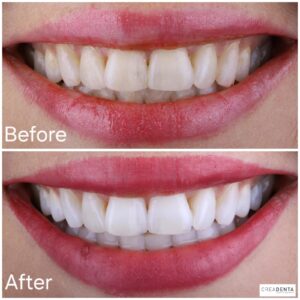
Which Teeth Are Whitened (Bleached) ?
The whitening of teeth depends primarily on their original colour. Whilst teeth with a yellowish tint can easily be whitened by 2–5 shades, it is more difficult to whiten teeth with a greenish-grey tint. Whilst whitening at a young age yields better results because the enamel is thicker and healthier, the degree of whitening is generally less in later life.
Sensitivity in In-Office Teeth Whitening
Some sensitivity is normal following teeth whitening, depending on the structure of the tooth. This is slightly more common in people with mild wear and cracks in their teeth. If there is any discomfort, it can be relieved with a mild pain reliever. If your dentist determines during the initial examination that your enamel does not have the appropriate characteristics for this procedure, they will not recommend teeth whitening.
Durability and Reliability
The results of teeth whitening are long-lasting. This timeframe also depends on the patient. Excessive smoking and habits involving excessive consumption of beverages like tea, coffee, and cola can affect this period. You should also avoid very hot or cold beverages and foods, as well as staining agents such as cigarettes, coffee, tea, cola, and red wine, for up to 24 hours after the procedure.
The light and gel, developed as a result of many years of research, are completely safe.
The whitening process is one that should not be repeated too often.
In-office teeth whitening (bleaching)
In-office teeth whitening (bleaching) is an effective method performed in a clinical setting under a dentist’s supervision. Thanks to the LED-activated zoom whitening system, the special gel applied to the tooth surface takes effect quickly. During the procedure, the gums are isolated with a protective barrier, and the whitening agent is safely applied. This in-office teeth-whitening procedure, which takes about 1 hour, is typically performed over several sessions, each lasting 15–20 minutes. LED light (which is sometimes mistakenly referred to as a laser) accelerates the active ingredients in the gel, thereby promoting skin lightening. This results in rapid and noticeable whitening of the teeth. Zoom whitening is not intended to remove external stains caused by things like cigarettes, tea, or coffee, but rather to lighten the tooth’s natural color. The most significant advantage of the procedure is that it is carried out entirely under the doctor’s supervision and produces results quickly. When post-treatment recommendations are followed, the whiteness achieved is maintained for a long time.
Home Bleaching (At-Home Teeth Whitening)
At-home teeth whitening is a procedure performed by placing carbamide peroxide-based gels into custom-made plastic trays that are taken from the mouth. The desired whitening effect is achieved in an average of 5–7 days. Depending on the shade and the gel, the trays must be worn for 4–8 hours a day. During the treatment period (5–7 days), you should avoid staining agents (such as tea, coffee, cigarettes, wine, and medicinal mouthwashes) as much as possible. Since home whitening is not supervised by a dentist, it is important to listen carefully to and follow all instructions provided regarding the procedure. Home whitening is sometimes used to complement in-office whitening.
Pre-Teeth Whitening Assessment
Before planning in-office teeth whitening, the teeth and gums are examined; existing cavities, cracks, wear, gum issues, and a history of sensitivity are assessed. If deemed necessary, it may be recommended to address these issues first. Professional cleaning can reduce surface stains; however, the cause of each discoloration and the appropriate treatment option vary.
If a single tooth is noticeably a different color from the others, or if there is a history of trauma or root canal treatment, different approaches may be necessary instead of standard whitening. For this reason, the cause of the discoloration and the patient’s suitability for whitening should be evaluated on a case-by-case basis.
Are fillings, crowns, and veneers white?
The whitening gel affects only the color of natural tooth structure. The color of fillings, porcelain crowns, zirconia veneers, laminates, and implant-supported restorations will not lighten with this procedure. For this reason, especially for patients with restorations in the front teeth, how color matching will be achieved after whitening should be discussed before treatment begins.
Implementation and the subsequent process
During the procedure, the gums and surrounding tissues are protected; the type, concentration, and duration of application are determined based on the individual’s initial tooth color and tooth structure. The degree of color change that can be achieved varies from person to person, and a specific shade cannot be guaranteed in advance. After the procedure, short-term sensitivity to hot and cold or temporary discomfort in the gums may occur. If these effects become pronounced, the dentist should be informed. The duration of the whitening results is influenced by oral hygiene, tobacco use, and habits involving foods and beverages that stain teeth. It is important to follow the dentist’s personalized care recommendations and not miss follow-up appointments. The need for a repeat treatment is assessed based on examination findings, not according to a fixed schedule.